
A student entering the world of traditional Chinese medicine needs to have an open mind about differences between tradition, science, and culture. It can be difficult to understand the concepts especially as students learning this medicine in a different language and mindset from the original material. The following books are some recommendations where authors, aware of this struggle, have deciphered the underlying philosophy in a readable way. Some authors in this recommendation list have even tried bridging the gap using western Biomedicine. These books can help develop your understanding of the definitions of wellness, illness, and healthcare. Before starting or even during acupuncture school, moving towards an understanding of evidence-based medicine, these books can help a student navigate this exploratory time.
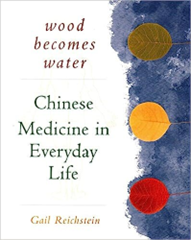
Author: Gail Reichstein, L.Ac.
Wood Becomes Water introduces the most foundational theory in Chinese cosmology, the Five Element Theory, where physical, emotional, and spiritual phenomenon can be identified at a simplified level with the language of five elements. Chinese medical theory describes functional organ systems as the five elements of wood, fire, earth, metal, and water. The author gives profiles to each of the five elements; they break down the properties of each element and their relationship with each other while applying the concepts to everyday life and health. Additionally, they explain acupuncture, dietary therapy, qigong, and feng shui in relation to each of the elements. This book would be a great basic introduction for a complete novice student to start thinking about traditional Chinese ideas on the properties and interconnections of organ systems in the body.
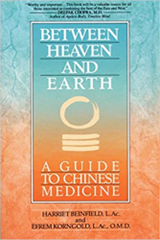
Author: Harriet Beinfield, L.Ac. and Efrem Korngold, L.Ac., O.M.D.
Between Heaven and Earth is a great guide presented for an audience that may not have any background with traditional Chinese medical ideas. The book begins by describing the authors’ own experience of learning about Chinese medicine in the 1970s comparing the medical philosophies of the West and East. The authors explore the basic building blocks of Chinese medicine going through the Yin-Yang theory, Five-Phase theory, tongue, and pulse diagnosis. Additionally, they give a readable introduction of acupuncture, channel theory, herbs, and pattern differentiation. Lastly, the authors talk about “kitchen medicine” by describing the differences in food ideology while giving simple nutritional recipes and tips. This book is a classic introduction to Chinese medicine written in the voice of authors exploring this philosophy that intrigues many beginning students.
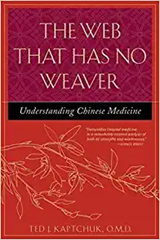
Author: Ted J. Kaptchuk, O.M.D.
The Web That Has No Weaver, like the previous selection, is a staple read for beginning students to Chinese medicine. The author quotes from the classical ancient Chinese texts but also current clinical research to synthesize their own guide about the web that is traditional Chinese medical philosophy. They go into detail about the four fundamental substances, Zang Fu organs, meridian system, pathological factors, four clinical examinations, eight principal pattern diagnosis, patterns of health seen clinically, while thoroughly digesting Taoist theory and modern research in the new edition. The author demystifies and explains traditional Chinese medicine in an accessible way. This is one of the main books that beginning students like to read to introduce themselves to the way of thinking of traditional Chinese medicine.
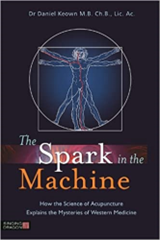
Author: Daniel Keown, M.D., L.Ac.
The Spark in the Machine describes the concepts of traditional Chinese medicine in the more commonly used terms of western Biomedicine to give the readers an explanation of concepts that may seem esoteric at first in an accessible, witty voice. The author begins the book by delving into some concepts that can be commonly overlooked in western Biomedicine including regeneration, fascia, piezoelectricity, systems theory, and anatomical landmarks; they combine these concepts to create their own functional definition of qi and acupuncture point energetics. Then, the author delves into how embryology relates to some foundational concepts of Chinese medicine. Finally, they combine these ideas to describe the meridian system in detail. This book bridges the gap for a student who wants to have more specific comparisons between western Biomedicine and traditional Chinese medicine. If a patient wanted to know where and why acupuncture points exist, this would be a great resource to recommend.
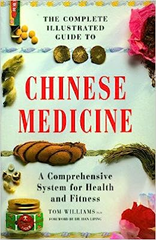
Author: Tom Williams, Ph.D.
The Complete Illustrated Guide to Chinese Medicine offers a comprehensive look into the fundamentals parts making up Chinese medicine. This is a great resource for beginning students to see an overview of the breadth of information that will be covered in a Chinese medicine program. The author briefly covers the basic principles and theory behind Chinese medicine including explanations about the meridian system, Zang Fu system, causes of disharmony that affect health and illness, and diagnostic techniques that can be used to identify these patterns of disharmony. They describe the treatment modalities that are used in Chinese medicine by introducing acupuncture, Chinese herbalism, qigong, and lifestyle ideas. Valuably, they offer example case studies that are insightful on what the clinical experience of a student may look like. This beautifully illustrated book would be a concise organized guide for a student imagining their journey in Chinese medicine studies.
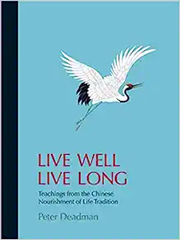
Author: Peter Deadman
Live Well Live Long goes deep into the details of the causes and effects of health and illness according to traditional Chinese medical thought. The author explains the concept of the nourishment of life, or yangsheng, and applies it to how life is experienced in modern times by analyzing the effects of modern lifestyles in conjunction with body constitution and causes of disease. They describe the fine points of each aspect related to well-being using Chinese medicine and health cultivation theories developed over centuries alongside citations of modern lifestyle research. These topics include emotions, diet, exercise, sleep, sexual behavior, pregnancy, care of children, nature, music and dance, old age, and death. A student can learn about lifestyle principles that support health which will be handy bringing into personal and clinical practices. This book is a great all-encompassing resource about Chinese health philosophies applied to modern life.
Pride Month is dedicated to uplifting LGBTQ voices, celebration of LGBTQ culture, and the support of LGBTQ rights.
I have been a part of AOMA since 2010, and I remember when I started my journey at AOMA I had the all-too-familiar worry of “will this be a safe place for me?”
Very quickly I learned that AOMA is not only a safe place for LGBTQ individuals, but it is also a place where people in the LGBTQ community can thrive.
In my experience, TCM in general, offers a safe and welcoming healing space for LGBTQ individuals.
In TCM there is the Yin-Yang Theory. While Yin is “feminine” and Yang is “masculine”, TCM is actually not a gender-binary form of medicine. The principles of Yin-Yang Theory make that clear:
Here we can see that Yin-Yang Theory is about a non-binary spectrum, much like how I associate with gender and sexuality. TCM sees individuals based upon the ever-changing, non-binary, endless variations that Yin and Yang can manifest and combine to create.
I was at a crossroads with my health in my mid-20s and TCM gave me hope when conventional medicine had left me hopeless. During my studies of this ancient wisdom medicine I not only learned how to be a practitioner and teacher in the field, I also grew in ways I never could have imagined. Studying TCM and working at AOMA was a huge part of my journey of awareness, understanding, and growth. Having a safe, LGBTQ-Affirming place to thrive was part of that.
The symbol of LGBTQ pride is a rainbow flag and each color has its own meaning:
Red = Life Force
Orange = Healing & Celebration
Yellow = Sunlight: New Ideas & Thoughts
Green = Nature: Prosperity & Growth
Blue = Serenity
Purple = Spirit
Black/Brown = People of Color & Inclusion
Light Blue/Pink/White = Trans Affirming
The rainbow flag is a visual reminder of the struggles and oppression that people in the community have faced and continue to face. However, the flag is also a sign of hope: no matter how you identify, the colors of the rainbow symbolize that you are included, you are welcome, and you are safe to be yourself, and are supported in your journey to thrive.
Introduction to TCM
Traditional Chinese Medicine (TCM) has been used for centuries to treat various ailments and promote overall health. Today TCM is gaining popularity worldwide due to its holistic approach to healing and prevention.
TCM originated in ancient China, with its earliest records dating back to the Shang Dynasty (1600-1046 BCE). It is a comprehensive system of medicine that encompasses a wide range of practices, including acupuncture, herbal medicine, qi gong, and tui na bodywork, among others.
The Principles of TCM
At the core of TCM is the belief in the interconnection between the mind, body, and spirit. TCM practitioners aim to achieve balance and harmony within the body by addressing underlying imbalances that cause illness or injury. The primary concepts of TCM include the theory of Yin and Yang, the Five Elements, and the concept of Qi (life energy).
TCM for Injury Recovery
Acupuncture is a popular TCM method that involves the insertion of thin needles into specific points on the body. It has been proven to be effective in reducing pain and inflammation, thus promoting faster recovery from injuries. Athletes can benefit from acupuncture as it can help reduce muscle soreness, alleviate joint pain, and improve circulation for faster healing.
TCM herbal medicine consists of natural plant-based remedies that can be used to promote healing and recovery. These herbs can be consumed in various forms such as teas, powders, or capsules. For athletes, specific herbal formulas can help reduce inflammation, improve blood flow, and support muscle and tissue repair.
Tui Na is a form of Chinese therapeutic bodywork that combines acupressure, stretching, and manipulation techniques to promote healing. It is particularly beneficial for athletes as it can help release muscle tension, reduce pain, and improve joint mobility. Tui Na can also help in injury recovery by stimulating blood flow and promoting the body’s natural healing process. By addressing muscular imbalances and promoting relaxation, Tui Na also can play a crucial role in preventing injuries and maintaining overall athletic health.
TCM for Injury Prevention
Tai Chi is a gentle martial art that focuses on slow, controlled movements and deep breathing. It is often referred to as “moving meditation” due to its calming effects on the mind and body. Regular practice of Tai Chi can help athletes prevent injuries by improving balance, flexibility, and overall body awareness.
Qigong is a system of coordinated body movements, breathing, and meditation used to improve overall health and well-being. It can help athletes prevent injuries by enhancing their flexibility, strength, and coordination. Additionally, Qigong’s focus on deep breathing and relaxation techniques can help reduce stress and improve mental focus, which can also contribute to injury prevention.
TCM for Improving Athletic Performance
In TCM, food is considered to be a form of medicine, and dietary therapy is an essential aspect of promoting overall health and well-being. TCM practitioners often recommend specific foods and herbs to enhance athletic performance, including those that support energy production, endurance, and recovery. Some examples of performance-boosting foods include goji berries, ginseng, and cordyceps, which are believed to increase stamina and strength.
Cupping is a TCM technique that involves placing glass or silicone cups on the skin to create suction. This process is thought to help improve circulation, remove toxins, and release muscle tension. Many athletes, including Olympic swimmers and professional football players, have turned to cupping therapy to enhance their recovery and performance. The increased blood flow and reduced muscle tension from cupping may help athletes to perform at their best and recover more quickly from intense training sessions.
Meditation is a cornerstone of TCM practices that can significantly benefit athletes in terms of mental focus and concentration. By incorporating meditation into their training regimen, athletes can develop greater mental resilience, leading to improved decision-making and enhanced performance under pressure.
Integrating TCM into Your Training Regimen
To fully harness the benefits of TCM for injury recovery, prevention, and improving athletic performance, it is essential to incorporate these practices into your regular training routine. Consult a qualified TCM practitioner to develop a personalized plan based on your unique needs and athletic goals. This may include a combination of acupuncture, herbal remedies, dietary recommendations, and specific exercises such as Tai Chi or Qigong.
Conclusion
Traditional Chinese Medicine offers a holistic approach to injury recovery, prevention, and athletic performance enhancement. By incorporating TCM practices such as acupuncture, herbal medicine, Tai Chi, Qigong, and dietary therapy, athletes can improve their physical and mental well-being, leading to better overall performance. Consult a qualified TCM practitioner to develop a personalized plan tailored to your specific needs and goals.
FAQs
Nowadays stress can be generated by various aspects of everyday life, such as work, relationships, living environment, etc. Long-term stress can create imbalances in our body systems, causing symptoms such as sleep disorders, fatigue, digestion disorders, hormonal imbalances, and so on. Acupuncture and herbal medicine may not be able to change the factors that create stress in your life, but they can help with stress-related symptoms and disorders. 
Acupuncture is based on the theory of meridians and acupuncture point energetics. Most stress-related cases manifest as the pattern of Qi stagnation. Qi is the fundamental terminology used in the field of acupuncture. Qi can be explained as the active energy or substance in our mind-body system. Stress interferes with the movement of Qi, thus leading to Qi stagnation. Traditional Chinese medicine practice applies different modalities to remove Qi stagnation and bring balance back to our mind-body system. These modalities include but are not limited to acupuncture needling, cupping, Tuina, Gua Sha, Qigong, and Tai Chi.
Herbal medicine can particularly help with soothing Qi stagnation to relieve stress-related disorders. To practice herbal medicine safely and effectively, a licensed acupuncturist will formulate an herbal prescription based on each patient’s individual case. Licensed acupuncturists in Texas are not only certified by the Texas Medical Board, but they are also required to meet NCCAOM (National Certification Commission for Acupuncture and Oriental Medicine) Herbal Board education requirements and to pass all board examinations.
There are different forms of herbal medicine, such as traditional herbal decoctions, herbal tea, herbal capsules, and tinctures, that can be selected based on efficacy, convenience, and patient preference. One of the most commonly used herbal formulas to sooth Qi flow and relieve stress disorders is Jia Wei Xiao Yao San (Free and Easy Wanderer Plus). This herbal formula is composed with multiple herbal ingredients to assist Qi flow, strengthen Qi and nourish blood. To ensure Jia Wei Xiao Yan San is prescribed effectively and safely, please consult a licensed acupuncturist.
There are multiple ways to support stress relief besides acupuncture and herbal medicine. Nutritional balance, adequate exercise, and sleep schedule adjustments can all be a part of a solution to stress disorders. A licensed acupuncturist can make recommendations and support you in all these areas, helping you along your journey to reducing stress in your life.
Women’s History Month, first beginning as Women’s History Week in 1981, honors the contributions women have made to a variety of fields, commemorating and encouraging the study, observance, and celebration of the vital role of women throughout history.
AOMA is fortunate to have several brilliant women acupuncturists in our Professional Clinic, all of whom are also faculty members and clinic supervisors at the Student Intern Clinic. Every day they contribute to the world and to the AOMA community by transforming the lives of patients and sharing their knowledge and wisdom with the future acupuncturists of AOMA’s student body. In honor of Women’s History Month, join me in learning more about these incredible women – I know you will find them as amazing and inspiring as I do!
Zhenni Jin, DAOM, L.Ac.
Why did you choose to become an acupuncturist?
Acupuncture and Chinese medicine were my first majors at the university; with 10 years of study, I’ve realized that this medicine helps people and supports health in a holistic way which is my goal and ambition with healing.
What qualities make a great acupuncturist?
Modesty, patience, and intelligence.
What accomplishment are you most proud of in your career?
Studying and practicing TCM in three different countries and regions.
What has been your biggest challenge as a woman in the TCM field?
Certain treatment modalities (like tuina) can be hard for women to practice considering body strength and keeping boundaries with patients.
What woman in your past has inspired you and how?
My first supervisor during my undergrad residency; she was the chief physician in the department, but she was so patient with me and guided me step by step.
Do you want to change any assumptions about women? Why?
There can be an assumption that women’s health should be all female practitioners’ strength. This is not true, and female practitioners have the ability to do other fields of medicine.
How do you balance your career with your family life, volunteer work, hobbies, and other interests? Has that balance changed over time?
There is no conflict between my career and life so far, luckily. As a practitioner there can often be some pressure and stress from your cases, and I can talk with my family about my stressful feelings. Listening to your trusted ones helps a lot with the emotional stress from work.
Can you tell us about a university or education experience that shaped your future career as an acupuncturist?
I joined a two-year Fellowship program by AIHM (Academy of Integrative Health and Medicine) last year as a White House Scholar. This educational experience connected me with many integrative practitioners over the states and largely expanded my vision of medicine and human health.
How important is higher education to the future of women and the world?
Higher education is crucial for the world, not only for women, not only for healthcare providers. Higher education provides a higher level of opportunity and challenges.
What message or advice would you like to share with other women acupuncturists or future acupuncturists?
I wish for you to seize any opportunity in your practice and career to become a better practitioner and serve the world.
Qiao ‘Chelsea’ Xu, MD (China), L.Ac.
Why did you choose to become an acupuncturist?
I heard a lot of stories about traditional Chinese medicine as a child. My mother once told me a story from her own childhood, over 80 years ago where my aunt had gotten shingles. Through using a combination of moxibustion and acupuncture, my grandmother was able to help my aunt recover very effectively. As I grew up, this story really resonated with me and helped drive me towards studying acupuncture.
What qualities make a great acupuncturist?
A great acupuncturist needs to be detail oriented, but also compassionate and mindful.
What accomplishment are you most proud of in your career?
There are two components to this: educating patients to empower themselves in their own life. Whether it be through qigong, dietary adjustments, mindfulness – helping patients balance their physical and mental health preventatively, not just symptomatically has been very fulfilling. As a teacher, I’m very proud of helping my students use TCM concepts to emphasize the connection between themselves and the universe around them. That mind-body balance and applying this to their treatment style.
What has been your biggest challenge as a woman in the TCM field?
The biggest challenge has been balancing work and my family.
What woman in your past has inspired you and how?
My mother is my biggest inspiration. She is loving, strong, and hard working – and fascinated with TCM. I saw her treat conditions that my father was enduring using TCM that even MDs failed to treat properly really. She really inspired me to become the practitioner I am today.
How do you balance your career with your family life, volunteer work, hobbies, and other interests? Has that balance changed over time?
Before getting married – I worked long hours in the hospitals. Finding the right balance after starting a family meant I had to figure out how to manage my time in new ways. For me this meant finding new efficiencies throughout the day. Listening to lectures while making a meal, or simple toe raises while sitting. A balance between maintaining an active mind and body without feeling like I was forcing anything. I’m proud of the effort I put into my family and career. That balance has to come from what feels right to each person. Over time as my children leave home, I’ve had time for more hobbies.
Can you tell us about a university or education experience that shaped your future career as an acupuncturist?
While a medical intern I remember an experience with a professor that was a very experienced eye acupuncturist. He was over 80 at this point, having developed many of his own techniques and practices. I’m nearsighted. My very first experience being treated by him was transformative – I could feel a lightness in my eyes. This experience really inspired me on how effective acupuncture could be.
How important is higher education to the future of women and the world?
Higher education is important not just for economic liberation and women’s careers – but also to uplift and be an example for the next generations.
What message or advice would you like to share with other women acupuncturists or future acupuncturists?
Love your patients. Love your job. The community and bonds formed are just as important as the career driven aspect of this profession. Take pride in your work with passion.
Yaoping ‘Violet’ Song, PhD, L.Ac.
Why did you choose to become an acupuncturist?
I wanted the opportunity to be able to help people.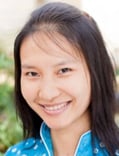
What qualities make a great acupuncturist?
First and foremost, caring.
What accomplishment are you most proud of in your career?
Having helped people back to health.
What has been your biggest challenge as a woman in the TCM field?
Not really challenge nowadays, but more advantages.
What woman in your past has inspired you and how?
There are a lot of them! My mom, my teachers, my coaches. They taught me to be Kind, Brave, and Smart.
Are there any assumptions about women that you would like to change? Why?
I really don’t care about assumptions.
How do you balance your career with your family life, volunteer work, hobbies, and other interests? Has that balance changed over time?
It’s a dynamic balance. I’m always adjusting it.
Can you tell us about a university or education experience that shaped your future career as an acupuncturist?
I appreciate all my education experience and it’s an ongoing process.
How important is higher education to the future of women and the world?
Higher education is equally important for both men and women.
What message or advice would you like to share with other women acupuncturists or future acupuncturists?
Don’t give up!
Reagan Taylor, MAcOM L.Ac.
Why did you choose to become an acupuncturist?
I used to work as a direct care staff for adults with intellectual disabilities, which can be incredibly challenging and deeply rewarding. As enriching as my experiences were, I knew I didn’t want to be a direct care staff forever, nor did I want to work as an administrator for a facility. This left me wondering how my desire to work with this community would manifest…then I had my first acupuncture treatment that changed everything. My world opened up, and I set on a path to become a Chinese medicine practitioner or the specific purpose of bringing it to the special needs community.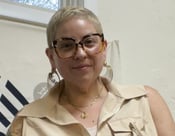
I worked at a facility during the entirety of my undergrad, throughout my master’s degree at AOMA, and remained working there after I graduated and became licensed. At the same time, I explored opportunities to treat the residents where I worked and build a practice. Since then, my career goals have shifted more towards clinical education, but I still have a deep desire to dedicate my time and expertise to this amazing community.
Now, as a full-time faculty at AOMA, I still hope to bring this incredible medicine to the special needs community by way of developing a student clinic. I can’t imagine a better way to serve those with cognitive disabilities than train and educate future healthcare professionals to work with these individuals with compassion and competency.
What qualities make a great acupuncturist?
Generally, I would say knowledge, compassion, confidence and a deep philosophical understanding of yin and yang. Ultimately, patients decide what makes a good acupuncturist according to their world views and values.
What accomplishment are you most proud of in your career?
My career is really just getting started, but as a practitioner, I must say I’m most proud of my attentiveness to my patients and the quality treatments I offer. I genuinely love Chinese medicine and providing patient care, and I believe that comes through when I’m with my patients. This also translates into my work as an instructor at AOMA with the students I teach and mentor. I feel that I’m trusted, and that truly means a lot to me.
What has been your biggest challenge as a woman in the TCM field?
I’m a rather opinionated person who isn’t afraid to use my voice when necessary (even when it’s not). Let’s just say I’m no shrinking violet, so I wouldn’t say that I personally have felt challenged as a woman in the world of TCM…yet. Although in the field as a whole, women are sorely underrepresented. Most of the practitioners in the United States are women; however, most of the people who have the most lucrative careers are men. Most of the well-known scholars of TCM are men. Most of the highest-paid educators are men. Most of the books are written by men. In this aspect, the world of TCM is no different from other industries. Knowing how many brilliant women there are in this field, I hope that dynamic shifts in the near future. Something tells me it absolutely will.
What woman in your past has inspired you and how?
Two women immediately come to mind: one of my oldest and closest friends, Shelagh Brown, and my teacher and mentor, Lesley Hamilton.
Shelagh has always been a force. She has challenged me in ways that provoke deeper analysis and critical thinking regarding society, spirit, and myself. Shelagh’s wide breadth of knowledge from plant medicine to racial injustice to history continually amazes and inspires me. I am the woman I am today because she constantly pushed me to be better and to do better, and I owe her the world.
AOMA is where it is today because Dr. Lesley Hamilton’s hard work, and anyone who knows anything will agree with me wholeheartedly. I have no idea how she does all of the things she does while maintaining her sanity and composure. She is quite literally Wonder Woman, and I have never met a more capable woman in all my life. The example Lesley set as an educator is what altered my career path to what it is today. When she can finally retire, her constant presence on campus and in AOMA’s community will be sorely missed.
Are there any assumptions about women that you would like to change? Why?
These days, a lot of the common misconceptions and assumptions about women are being challenged and are finally changing. If I had to choose one belief about women to change, it would be one that has plagued us for literally thousands of years and can be summed up in one word…hysteria. This word originates from the word hysteria, which is Greek for the uterus.
It doesn’t take a linguist or a scholar to see the blatant link between women and emotional upset. It’s time that this ridiculous view of women being so volatile in how we handle our emotions is set aside. Instead, I think it’s important to normalize everyone expressing natural emotion in healthy, productive ways. There is also value in showing compassion and understanding in the moments of emotional overwhelm, because that happens too.
How do you balance your career with your family life, volunteer work, hobbies, and other interests? Has that balance changed over time?
Everyone, regardless of their gender identity, needs to find a harmonious balance between work life and living life. In this day and age, it can be challenging to strike a true equilibrium. For myself, I’ve made it a point to focus on the aspects of life that keep my emotional cup full. While there are times I struggle with maintaining a perfect, peaceful balance, I always take time for my family, friends, and to get in some good snuggles with my dogs.
Can you tell us about a university or education experience that shaped your future career as an acupuncturist?
For myself, it goes the other way around. My desire to become an acupuncturist is what shaped my educational experiences. I didn’t know what I wanted to be when I grew up until I was 27. With only a few college-level classes under my belt, I basically had to start from the ground up and develop myself as a student with the end goal to become an acupuncturist.
AOMA was always the school I wanted to go to. I’m a local Austinite, so knowing the high quality of education that AOMA has, I didn’t see a need to go anywhere else. I studied the curriculum and built my undergrad experience with classes to best prepare me and serve my educational experience at AOMA. I focused on advanced sciences, particularly biology. I took psychology and sociology classes to expand my world views and understand different human experiences, which helps me in clinical practice, serving my patients the best way possible.
How important is higher education to the future of women and the world?
I find a lot of value in higher education, but not everyone has access to this privilege. I think women should be appreciated and respected, regardless of their educational level or career choices. We all have something to offer and things to teach one another.
With that being said, the world of higher education, and most trades, are dominated by men. This is changing rapidly, and women are now demanding recognition and respect in these spaces.
What message or advice would you like to share with other women acupuncturists or future acupuncturists?
Throughout every age of human history, women have a tradition of being healers…we shouldn’t shy away from embracing this powerful legacy. We are the backbone of this profession, and our contributions cannot and should not be understated, overlooked, or undervalued.
By Dr. Joel Cone
Gordon Ramsey said it best when he said, “Fat is flavor.” And it’s true. Some of the best things are entirely made of fat or supremely enhanced by it. Think of truffle-buttered eggs, olive oil-rich tapenade, the Brazilian fish moqueca with its rich coconut flavor, or the ever-classic beverage: Hollandaise Sauce! But fats don’t only add a richness and flavor to our foods, they also pack in powerful metabolic regulation, for better or worse. You all know the adage you are what you eat, and a lot of who you are is fat: your brain, your stored energy reserves, your cell membranes and myelin. The type of fat you eat is important, as the regulatory cascade that it sets up can determine whether an injury resolves quickly without pain, or becomes chronic and unresolving and debilitatingly painful. Remember most pain-relieving medications, NSAIDs and corticosteroids, are drugs that influence the manufacture of eicosanoid particles. These molecules are directly pulled from fat in your cell membranes and the type of fat available can influence these molecules..png?width=288&name=Fat%20Is%20Flavor%20Images%20(2).png)
So how do we assess inflammation? We can get a thorough history and look for inflammatory indicators: smoking, sedentary lifestyles, poor food quality in a diet diary, and symptoms of pain, repetitive injury, allergies, etc. These can all be important clues to gather and assess. We can also look to blood tests. Frankly, some patients won’t trust you until they see a test in hand. You may have told them what they need, but they had to go spend the $100 on the lab tests to adopt your ideas. Such is human nature. So, what lab tests could you get? C-reactive protein and erythrocyte sedimentation rate often come to mind, though I very rarely see these elevated on blood tests, even with other signs of inflammation in the history or physical exam, so they aren’t very usefully in the general ambulatory population, in my opinion. They are still an option. I do think the Omega 3-to-Omega 6 ratio is a good test, and available through Quest Diagnostics, CPL, or other blood diagnostic labs. It gets to the dietary roots of what your patients look like internally. It looks at the roots of the inflammatory cascade and how the person is relatively set with regards to fats, and thus inflammatory processes.
.png?width=257&name=Fat%20Is%20Flavor%20Images%20(1).png) The typical Western diet contains a considerably increased ω-6 fatty acid relative to the ω-3 fatty acids (FA). Essential fatty acids (EFAs), taken in via diet or supplements, are essential components of cell membrane phospholipids, and appropriate membrane fatty acid content is pivotal for optimal membrane fluidity, receptor activity and cellular metabolism. The same FAs eventually give rise to hormone-like substances (eicosanoids) that are involved in the regulation of blood pressure and coagulation, lipid levels, immune response, allergy and asthma, tumor growth and inhibition (1), the inflammatory response to injury and infection, and they may play a role in seizure disorders, depression, and dementias such as Alzheimer’s disease (2). Increased blood flow to the brain is seen with persons with improved ω-3 FA levels. Talk about an important group of molecules!
The typical Western diet contains a considerably increased ω-6 fatty acid relative to the ω-3 fatty acids (FA). Essential fatty acids (EFAs), taken in via diet or supplements, are essential components of cell membrane phospholipids, and appropriate membrane fatty acid content is pivotal for optimal membrane fluidity, receptor activity and cellular metabolism. The same FAs eventually give rise to hormone-like substances (eicosanoids) that are involved in the regulation of blood pressure and coagulation, lipid levels, immune response, allergy and asthma, tumor growth and inhibition (1), the inflammatory response to injury and infection, and they may play a role in seizure disorders, depression, and dementias such as Alzheimer’s disease (2). Increased blood flow to the brain is seen with persons with improved ω-3 FA levels. Talk about an important group of molecules!
Historically, evidence is indicative that early hunter-gatherer diets had ω-6 to ω-3 fatty acids ratiosclose to 2:1. Estimates of modern ratios are now 10:1(3) to 18:1 to 50:1(2) by some estimations! And throw in the novel trans fatty acid isomers and we have a disaster on our hands (4).
Needless to say, we (…most persons anyway) need considerably more ω-3 fatty acids and considerably less ω-6 fatty acids than we currently are getting. It’s probably safe to assume the patient has a ratio greater than 2:1. High levels of ω-6 fatty acids are found in refined grains and vegetable oils, such as safflower, soy, corn, peanut, and canola oils… think fried foods, chips, crackers, cookies, chain restaurant type-foods. The ω-6 fatty acids are found in green leafy vegetables and ocean fish, such as salmon, mackerel, and sardines, or krill and other sources from plankton..png?width=270&name=Fat%20Is%20Flavor%20Images%20(3).png)
There are other ω-6 fatty acids, such as flax seed oil, that can convert to essential fatty acids like EPA and DHA. However, flax seed conversion can be as low as 2%! This is a hard-to-rely on source for EPA and DHA.
Another category of fat is arachidonic acid. Small amounts are needed, but elevated levels can be unhealthy, if not balanced with other fats. High concentrations of arachidonic acid are found in dairy, eggs, meats and shellfish.
The trouble with ω-6 fatty acids is when they are elevated, they convert to arachidonic acid, which drives up the arachidonic levels, and the unhealthy and proinflammatory effects can be quite high. Vegetarians and vegans, in some studies, have been shown to have higher levels of arachidonic acid than omnivores, due to elevated consumption of ω-6 fatty acids coupled with lower levels of ω-3 fatty acids and elevated insulin levels due to higher consumption of carbohydrates! Crazy, right? Conversion of ω-6 fatty acids to arachidonic acid is slowed by the presence of eicosapentanoic acid (in fish oils) and sesame seed oil (raw).
Although often women have elevated ω-6 fatty acids, estrogen from female physiology or estrogen-containing birth control pills can inhibit the formation and use of ω-6 and ω-3 fatty acids (lenolenic and linoleic) and sometimes women can benefit from additional types of ω-6 fats (such as found in Evening Primrose Oil, Black Currant Seed Oil, or Borage Oil) along with EPA (fish or krill oil). Severe cramping around the menstrual cycle can hint at this being an issue(5).
All of this sound confusing? Well, it’s not as confusing as I’m probably making it. A simple rule is to try to balance your fat categories. Here are some simple ideas that can help:
I always try to consider what will make the biggest impact on my patient’s physiology with the least cost or annoyance. Fatty acid ratios and consumption patterns are an approach that has very broad effects on a person’s physiology and can be a good place to start when inflammation may be involved.
Work Cited:
0 Comments Click here to read/write comments
Topics: Traditional Chinese Medicine, nutrition, integrative medicine, holistic healing, acupuncture, aoma, tcm, ATX

©1998-2022 AOMA Academy, LP - All Rights Reserved | Privacy Policy